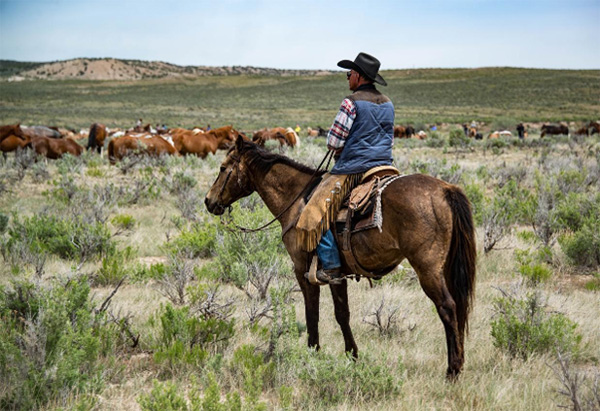
In Oklahoma, being sidelined by a failing hip or knee is not just an inconvenience. For the ranchers, rodeo competitors, and working cowboys whose livelihoods and identity are tied to physical activity, it is the difference between the life they know and one that no longer feels like their own. Joint replacement surgery carries a reputation for long recovery and lasting limitations, but the reality for patients who choose robotic-assisted technique is often considerably different from that expectation.
James: An Old Worn-Out Cowboy Who Got Back on His Horse
James describes himself as "an old worn-out cowboy." Before surgery, even climbing onto a horse brought him to tears. "When I got on a horse, I could barely keep from crying, It hurt so badly." Arthritis and wear and tear had cut off blood flow to his hip joint, and he knew it was time for surgery. After consulting with Dr. Jacob, James was quickly scheduled for hip replacement surgery and had both hips replaced just two months apart. His story is not unusual among Dr. Jacob's Oklahoma patient population, where the physical demands of ranch and rodeo life mean that joint deterioration is often pushed far past the point where most people would have already sought care. What makes it significant is what happened after: a return to the saddle, to the horses, and to the life that pain had been steadily taking away.
Why Oklahoma's Active Population Puts Unique Demands on Joint Replacement
The physical demands that come with ranching, rodeo, and agricultural work in Oklahoma are not well-served by a joint replacement that simply gets a patient walking in a straight line. These patients need a joint that can handle uneven terrain, repetitive mounting and dismounting, the unpredictable physical demands of working livestock, and a return to an active outdoor lifestyle on a timeline that fits a working schedule rather than a standard hospital-defined recovery arc. That combination of high physical expectations, an active lifestyle, and often years of deferred treatment while managing through pain is exactly the patient profile that benefits most from surgical precision and a technique that preserves as much native tissue as possible.
The Subvastus Approach: What Muscle-Sparing Means for Knee Replacement Recovery
For patients undergoing knee replacement, Dr. Jacob's preferred technique is the subvastus or muscle-sparing approach, which works below and around the vastus medialis muscle rather than cutting through the quadriceps tendon to access the joint. This leaves the extensor mechanism of the knee structurally intact from the moment surgery is complete. For patients whose recovery goals include returning to physically demanding activity as quickly as possible, this distinction matters from the very first day. The immediate mobilization philosophy that characterizes Dr. Jacob's approach, getting patients out of bed and walking within hours of surgery, is made possible in part because the muscle architecture around the knee has not been cut, which means the body is not simultaneously repairing tendon tissue and learning to use a new joint.
How Robotic Guidance Complements Both Hip and Knee Replacement
Preserving the surrounding muscle is one part of the equation. Placing the implant with precision is the other, and this is where Mako robotic-arm-assisted technology adds a measurable advantage over manual instrumentation. The Mako system uses a preoperative CT scan to build a three-dimensional model of each patient's specific joint anatomy, allowing Dr. Jacob to plan component position and soft tissue balance before the procedure begins. During surgery, the robotic arm provides real-time guidance and boundaries that keep bone preparation within the planned parameters, producing implant positioning and balance that is difficult to achieve consistently through manual technique alone. For active patients whose joints will be loading at high levels across varied terrain for years to come, that precision is not incidental. It is what gives the replacement its long-term mechanical foundation. Dr. Jacob has now performed more than 5,000 robotic-assisted hip and knee replacement surgeries, a volume that reflects both the demand for this approach and the consistency of its outcomes in his hands.
What Recovery Actually Looks Like for an Active Oklahoma Patient
Across Dr. Jacob's patient testimonials, several themes appear consistently regardless of whether the patient was a weekend golfer, a daily walker, or a physically active outdoor worker. Recovery timelines that surprised them. Pain that was more manageable than anticipated. A return to activities they had given up long before surgery. One patient was off pain medication within a week and walking without assistance within two weeks. Another returned to running marathons. A third completed a Disney half marathon nine months post-surgery. For James, the measure of success was simpler and more personal: getting back on a horse without tears.
When to Stop Managing Pain and Start Moving Forward
The patients who tend to benefit most from this approach are also often those who waited longest to pursue it, managing through joint pain with activity modification, injections, and determination before the joint simply could not keep up with what life in Oklahoma required of it. Cartilage damage and bone-on-bone arthritis do not improve with time, and the longer the joint deteriorates, the more the surrounding muscle and soft tissue adapt to pain-avoidance patterns that take longer to correct after surgery. Getting an accurate assessment of where the joint actually stands changes what the options look like, and for many patients, the answer is considerably more encouraging than they expected.
If joint pain has been keeping you out of the saddle, off the pasture, or away from the activities that define your life, a proper evaluation is the first step toward understanding what is actually possible.
Frequently Asked Questions
Is robotic joint replacement better than traditional hip or knee replacement?
Robotic-assisted replacement allows for more precise implant positioning and soft tissue balancing compared to manual technique, which translates to more consistent functional recovery, particularly for active patients with high physical demands.
What is the subvastus or muscle-sparing knee replacement approach?
The subvastus approach accesses the knee joint by working around rather than through the quadriceps tendon, preserving the extensor mechanism and contributing to faster early recovery and less postoperative pain compared to the standard approach.
How soon can you walk after robotic hip or knee replacement?
Many of Dr. Jacob's patients using the muscle-sparing approach are standing and walking within hours of surgery, with most transitioning away from assistive devices within one to three weeks depending on individual progress and physical conditioning.
Can active outdoor workers and ranchers return to physical activity after joint replacement?
Yes. Patients with physically demanding lifestyles can return to activities including riding horses, walking uneven terrain, and light physical work, typically within a few months of surgery when recovery is managed appropriately and rehabilitation is followed consistently.
How do I know if I need joint replacement or if I can still manage conservatively?
The decision depends on the degree of joint damage, how significantly pain is limiting daily function, and whether conservative options including physical therapy and injections have been genuinely tried and found insufficient, which is why an individual evaluation with imaging is the most reliable way to assess where you actually stand.
AUTHOR: Dr. Paul B. Jacob, DO, MSPT, FAAOS - Master Surgeon
Dr. Paul B. Jacob, DO, MSPT, FAAOS, is a certified Master Surgeon in joint replacement and robotic joint replacement of the hip and knee at the Oklahoma Joint Reconstruction Institute. Dr. Jacob is recognized as one of the Top 3 Orthopedic Surgeons in Oklahoma, who has performed over 7000 robotic joint replacement procedures. Dr. Jacob is active in numerous research studies on joint replacement technology and robotic outcomes. He provides advanced, minimally invasive solutions designed to restore mobility, reduce pain, and support faster recovery.
Credentials & Recognition
Dr. Jacob earned his Doctor of Osteopathic Medicine from Ohio University Heritage College of Osteopathic Medicine and also holds a Master of Science in Physical Therapy. He completed orthopedic residency training followed by fellowship training in adult reconstruction at Cleveland Clinic. He is board-certified by the American Osteopathic Board of Orthopedic Surgeons, a Fellow of the American Academy of Orthopaedic Surgeons, and has achieved Master Surgeon accreditation in both Joint Replacement and Robotic Joint Replacement from the Surgical Review Corporation.
Awards & Recognition
Dr. Jacob has been named one of the Top 3 Orthopedic Surgeons in Oklahoma City by ThreeBestRated®, selected through a rigorous 50-point inspection covering reputation, patient satisfaction, and clinical excellence. He was also recognized by Becker's Healthcare as one of the "10 Orthopedic Surgeons to Know." In 2022, Dr. Jacob became the first orthopedic surgeon in Oklahoma to earn Surgical Review Corporation accreditation as a Master Surgeon in both joint replacement and robotic joint replacement.
Clinical Expertise
Dr. Jacob specializes in primary and revision hip and knee replacement, robotic-assisted joint surgery, minimally invasive techniques, and rapid-recovery protocols aimed at improving long-term joint function and patient outcomes.
Medical Disclaimer: This information is for educational purposes only and does not constitute medical advice. For diagnosis and treatment recommendations, please consult with Dr. Jacob at the Oklahoma Joint Reconstruction Institute.
Content authored by Dr. Paul B. Jacob and verified against official sources.